
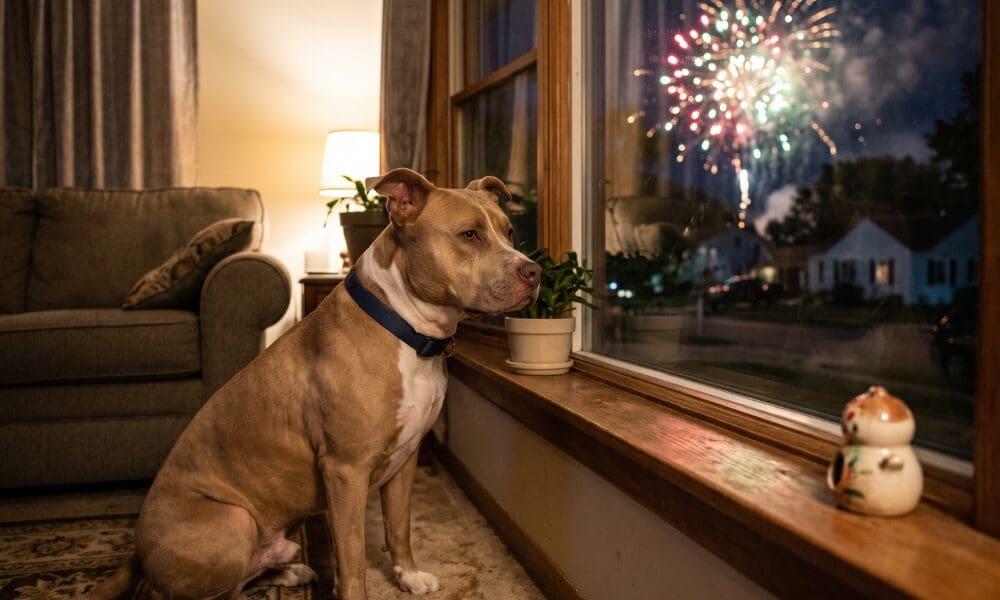
This Fourth of July is unlike any other. As our country celebrates its 250th anniversary, communities across America will gather for parades, barbecues, concerts, and some of the biggest fireworks displays in recent memory.

For many people, fireworks are a highlight of the holiday. For dogs, they’re often the exact opposite.
The loud booms, bright flashes, and unpredictable noises can be frightening, even for dogs that normally seem calm and confident. Every year, animal shelters see an increase in lost pets around the Fourth of July because frightened dogs panic, escape fenced yards, or slip out open doors searching for safety.
The good news is that with a little preparation, you can help your dog stay safe, secure, and comfortable while you enjoy the holiday.
Why Fireworks Are So Scary for Dogs
Dogs experience the world differently than we do.
Their hearing is significantly more sensitive than ours, allowing them to detect sounds from much farther away. A fireworks show that seems loud to us can be overwhelming for a dog.
Unlike thunderstorms, which often build gradually, fireworks happen without warning. The sudden explosions, flashing lights, and unfamiliar smells can trigger a dog’s natural fight-or-flight response.
Some dogs may shake or hide under furniture. Others may bark excessively, pace around the house, pant heavily, or try to escape.
Even dogs that have never shown fear before can react differently during a large fireworks display.
Keep Your Dog Indoors
One of the simplest and most effective ways to protect your dog is to keep them inside before fireworks begin.
Even dogs that spend time comfortably in fenced yards should come indoors well before dark. A frightened dog can climb, dig, or squeeze through surprisingly small openings if they panic.
Close windows, secure doors, and make sure everyone in the household knows to be extra careful when entering or leaving the house throughout the evening.
If you’re hosting guests, remind them that your dog may be anxious and ask them to avoid leaving doors open unnecessarily.
Create a Safe Space
Many dogs naturally look for small, quiet places when they’re nervous.
Set up a comfortable area where your dog can retreat if they become anxious. This might be their crate if they already enjoy using it, a bedroom, or a quiet corner with their favorite bed and blanket.
Playing soft music, turning on a fan, or keeping the television on can help mask some of the outside noise.
Stay calm yourself. Dogs often look to their owners for reassurance, and your relaxed behavior can help them feel more secure.
Make Sure Identification Is Current
The days surrounding the Fourth of July consistently see one of the highest numbers of lost pets each year.
Before the holiday, check that your dog’s collar fits properly and that their identification tags are current and easy to read.
If your dog has a microchip, take a few minutes to confirm that your contact information is up to date. A microchip can only help reunite you with your pet if the information attached to it is accurate.
These simple steps can make all the difference if your dog unexpectedly gets loose.
Exercise Before the Festivities Begin
Giving your dog plenty of physical activity earlier in the day can help them settle more comfortably during the evening.
Take a long walk in the morning or spend extra time playing in the backyard before temperatures become too hot. Mental enrichment, such as puzzle toys or training games, can also help burn energy.
While exercise won’t eliminate anxiety caused by fireworks, a dog who has had a full day of activity is often more likely to rest once they’re back inside.
Leave the Fireworks to the Professionals
Many families enjoy bringing their dogs to community celebrations, but fireworks displays are generally not the place for pets.
Large crowds, loud noises, unfamiliar people, and sudden explosions can quickly overwhelm even well-socialized dogs.
Your dog will almost always be happier and safer relaxing at home than sitting through a fireworks show.
Similarly, avoid setting off consumer fireworks around your pets. Even smaller fireworks can create enough noise to trigger fear and anxiety.
Know When Your Dog Needs Extra Help
Some dogs experience more than mild nervousness during fireworks. They may panic, attempt to escape, or show signs of severe anxiety.
If your dog has struggled with fireworks in previous years, talk with your veterinarian before the holiday. They can recommend strategies or, in some cases, prescribe medication to help your dog remain calm during particularly stressful events.
Planning ahead is always better than trying to manage severe anxiety after the fireworks have already started.
A Holiday Worth Celebrating Together
The Fourth of July is a time to celebrate our nation’s history, spend time with family and friends, and reflect on the freedoms we enjoy. As America marks its 250th birthday, it’s also a reminder to care for the family members who rely on us every day—including the four-legged ones.
For rescue dogs especially, holidays filled with loud noises can be confusing. Many have experienced uncertainty in the past, and a calm, secure home can make all the difference.
By taking a few simple precautions, you can help ensure that the holiday ends with everyone safe, comfortable, and together.
From all of us at Kennel to Couch, we wish you a happy, safe, and memorable Fourth of July.
And if you’re thinking about adding a new member to your family this summer, consider giving a rescue dog the greatest freedom of all—a place to call home.
Visit KenneltoCouch.org to learn more about our mission, meet adoptable dogs from our shelter partners, and discover how you can help give at-risk pit bulls the second chance they deserve.
Recent Comments