
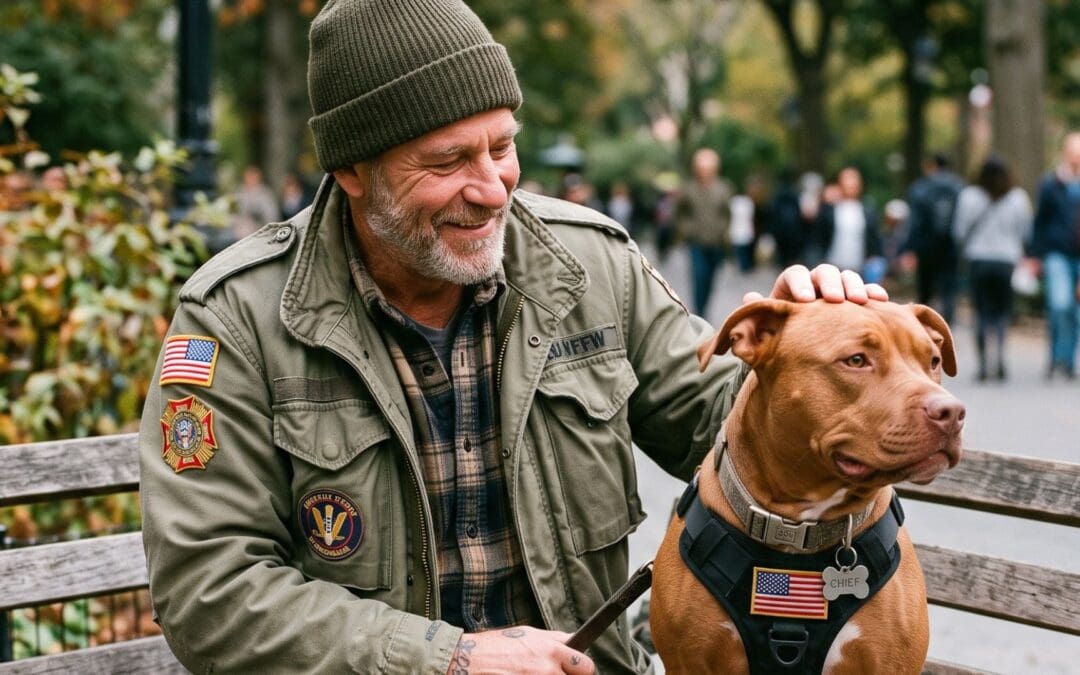
In 2016, researchers at Arizona State University published a study that should have changed more than it did.

They looked at pit bull-type dogs in a shelter setting and compared them to lookalike dogs of similar size, coloring, and build who happened to be labeled something else. Same dogs, functionally. Different words on the kennel card.
The dogs labeled “pit bull” waited roughly three times as long to be adopted.
Three times longer is not an abstraction
Think about what a shelter stay actually is for a dog. It’s concrete and chain link. It’s noise that never fully stops. It’s a kennel neighbor barking at 2 a.m. and no way to get away from it. Dogs who do fine in a home can start to unravel in that environment, and the unraveling gets written down as a behavior note, and the behavior note makes the dog harder to place, and the dog stays longer.
So the extra time isn’t just waiting. It compounds. A dog who arrives friendly and adoptable can become a dog who presents poorly at the kennel front, which extends the stay, which makes the presentation worse. In shelters operating at capacity, length of stay is one of the numbers that determines which dogs get more time and which ones don’t.
The Arizona State team also studied what happened at a shelter that stopped putting breed labels on kennels at all. Adoptions went up and length of stay went down across every breed group, with the biggest effect on pit bull-type dogs. A separate 2020 study across three New York-area shelters found the same thing: median length of stay fell from 30.3 days to 19 days after breed labels came off the adoption cards, and returns stayed flat at 6 percent.
Nothing about the dogs changed. The description did.
What actually moves a dog out
Removing a label helps. But shelters that pull it off still face the harder problem, which is attention. A dog who nobody sees doesn’t get adopted no matter how she’s described.
That’s the gap Kennel to Couch was built to close. We sponsor one dog at a time, the most at-risk dog in a partner shelter, and we run a campaign around that single animal. A name. Photos that show who she actually is. A story written like she’s a specific dog rather than an inventory item. That single-dog focus creates something a general adoption page can’t: urgency about one particular life.
It works. Kennel to Couch has a 100% placement rate, and we’re very proud of that number.
Removing the last obstacle
There’s a second barrier that shows up after someone falls in love with a dog, and it’s a practical one. Adoption is the cheap part. The first month is not. Crate, bed, food, leash, harness, training support, vet follow-up. For a family already stretched, that math can turn a yes into a maybe.
Every Kennel to Couch sponsored dog goes home with the Pibble Package, a set of care essentials given to the adopting family at no cost. It removes the “can we afford this right now” hesitation at exactly the moment it would otherwise stall an adoption.
The part you can do
Here’s the honest version of the ask. The research tells us these dogs wait about three times as long for reasons that have nothing to do with the dogs. Every week of that wait is a week of kennel noise, kennel stress, and shrinking odds.
Sponsorship shortens the wait. So does sharing a specific dog’s post with people who don’t already follow rescue accounts. So does fostering, which gets a dog out of the kennel environment entirely and produces the kind of detailed, real-life information that actually sells an adoption.
October is National Pit Bull Awareness Month. Pick one dog on our sponsored list and do one thing for her.
Recent Comments